CULT
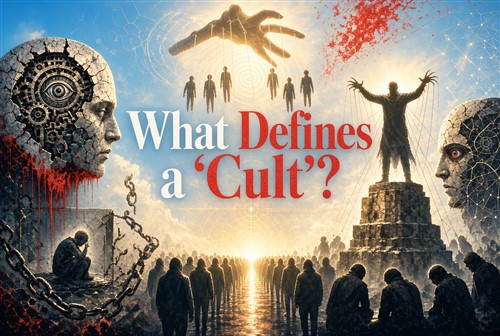
Israeli Messianic Believers are often accused of being a “CULT”. That bears no resemblance to reality to any of the Messianic congregations I have been covering for the past 25 years! So I was glad to see Israeli Messianic congregational leader, Guy Cohen, shed some light on this. As the saying goes, “Sunshine is the best disinfectant” and I believe Guy Cohen moves this discussion forward greatly.
Guy Cohen writing on August 10, 2026:
In Israel, the word “cult” carries an unmistakably negative meaning. It evokes images of manipulation, psychological control, blind obedience, isolation and leaders who exercise extraordinary power over their followers. Yet the same word has also appeared in Israeli public discourse as a description of Messianic Jews, a community whose members identify as Jews and believe that Yeshua is the Messiah.
The label is not confined to private conversations. Israeli religious media have explicitly described Messianic Jews as a “cult,” while mainstream Israeli media have also reflected the language of suspicion surrounding the community. In a 2009 report by the investigative television program Uvda about the bombing that severely injured 15 year old Ami Ortiz, whose family was part of a Messianic community in Ariel, the accompanying report described the hostility directed toward Messianic Jews and noted accusations that they sought to turn Israel into a Christian country. It also described them as being treated as missionaries attempting to win Jewish souls.
The suspicion surrounding Messianic Jews in Israel cannot be understood simply as a disagreement about Yeshua. Behind it stands another word with an especially powerful meaning in Israeli Jewish society: “missionary.”
For many Israelis, missionary activity is not perceived as the neutral sharing of a personal faith. It carries a historical memory of the relationship between Jews and Christianity, including periods in which Jewish communities experienced persecution, discrimination, pressure to convert and, at times, forced conversion.
That history continues to influence the language of modern Israel.
Continued
Research by Shai Wineapple and Professor Ruth Kark of the Hebrew University of Jerusalem examined the relationship between Messianic Jews and the State of Israel from 1948 to 2008. Their research found that broad circles of Israeli Jews regarded Messianic Jews as converts to Christianity, while Messianic Jews described themselves as Jewish believers in Yeshua. The researchers also found that Israeli religious discourse frequently associated Messianic Jews with Christian missionary activity.
That association has deep roots in the history of the state itself. In another study, Wineapple and Kark examined the relationship between Christian missionary organizations and Israel during the first decades after independence. They describe a state attempting to balance two competing concerns: opposition to efforts aimed at converting Jews to Christianity and a commitment to freedom of religion.
The tension was not merely cultural. It reached the Knesset and Israeli law.
Israeli law does not impose a general prohibition on an adult discussing faith or attempting to persuade another adult to change religion. It does, however, prohibit particular conduct connected with conversion. Israeli legislation restricts the religious conversion of minors, and the Penal Law prohibits offering money or another material benefit as an inducement for a person to change religion.
The language used during historical Knesset debates is revealing. Discussions surrounding legislation on conversion repeatedly referred to the perceived “danger” of missionary activity and to missionary organizations operating in Israel. This demonstrates that the anxiety surrounding mission was present not only in religious communities but also in the political debate of the young state.
This history helps explain why the appearance of a Messianic community in contemporary Israel can produce a reaction that goes beyond ordinary theological disagreement.
A Jew who believes in Yeshua challenges a boundary that much of Jewish society considers settled.
Messianic Jews generally understand themselves differently. They do not necessarily see faith in Yeshua as abandoning their Jewish identity. They believe that Yeshua is the Messiah promised in the Hebrew Scriptures and therefore understand their faith as something connected to their Jewish identity rather than its rejection.
The distinction is crucial because the two sides are beginning from different definitions.
From the perspective of many traditional Jewish authorities, accepting Yeshua places a person outside Judaism in a religious sense. From a Messianic perspective, believing in Yeshua does not erase Jewish identity.
Israeli institutions have confronted precisely this conflict.
Israeli courts have previously dealt with the status of Messianic Jews under the Law of Return. The legal history reflects the broader disagreement over whether belief in Yeshua should be understood as a Jewish belief or adherence to another religion.
But the legal picture is more complicated than the public rhetoric sometimes suggests.
In a 2021 Supreme Court decision concerning tax benefits for nonprofit organizations, the Court addressed an organization belonging to a community whose members identified themselves as Messianic Jews. The Court noted that converting minors and offering material benefits to induce religious conversion are prohibited by law. But it also stated that in the case before it there had been no sufficient evidence establishing that the Messianic organization was engaged in illegal conversion activity.
That distinction is important.
Missionary activity, illegal inducement to conversion and membership in a cult are not synonymous concepts.
The question, then, is what the word “cult” actually means.
A report produced by Israel’s Ministry of Welfare and Social Services offers a useful point of comparison. Its definition of harmful cults does not focus primarily on whether a group holds unusual theological beliefs. Instead, it describes groups organized around a person or idea that use methods of controlling thought and behavior, create a separate identity through deception, encourage psychological dependency and obedience, exploit members and cause psychological, physical, economic or social harm.
Under that definition, the central issue is not whether society considers a belief strange.
The issue is control.
Does a community manipulate its members? Does it demand submission to a leader? Does it create psychological dependency? Does it exploit people? Does it cause measurable harm?
Those questions are very different from asking whether a Jew should believe in Yeshua.
This distinction becomes particularly significant when the word “cult” is used to describe Messianic Jews as a whole. A theological disagreement can establish that two groups understand Judaism differently. It cannot by itself establish psychological manipulation, coercive control or exploitation.
This does not mean that a Messianic congregation, simply because it calls itself Messianic, could never display unhealthy or abusive characteristics. Any community can be examined according to the behavior of its leadership and the freedom of its members. A Messianic congregation should not be exempt from that scrutiny.
But the same standard should apply to every community.
The New Testament itself provides a striking framework for examining the question.
In Acts 2:42-47, one of the earliest communities of believers in Yeshua is described through teaching, fellowship, prayer, breaking bread and care for people in need.
Paul later describes the community in 1 Corinthians 12:12-27 as a body composed of many members. The image does not place the entire community inside one human leader. Each member has a function and each belongs to the larger body.
Ephesians 4:11-16 describes leadership as having the purpose of equipping believers for service and helping the community reach maturity.
Perhaps more significantly, Yeshua directly addresses the exercise of authority.
In Mark 10:42-45, he contrasts the way worldly rulers exercise authority with the way his disciples are expected to lead. Leadership among them is to be expressed through service.
A similar principle appears in 1 Peter 5:2 and 3, where elders are instructed to shepherd those entrusted to them without domineering over them and instead to lead by example.
Galatians 5:13 introduces another important element: freedom. Believers are called to use their freedom in service to one another through love.
These passages do not prove that every congregation lives according to these principles. A community can profess biblical values while failing to practice them. Claims of faith should never shield leaders from legitimate scrutiny, and spiritual language should never excuse manipulation or abuse.
But the texts do demonstrate something important about the distinction between a cult and a community.
The stated New Testament model of leadership is service rather than domination, maturity rather than dependency and a body of believers rather than absolute power concentrated in a single human authority.
That makes the Israeli use of the word “cult” worth examining more carefully.
Sometimes the term may be intended as a genuine allegation about the behavior of a particular group. At other times it appears alongside accusations of missionary activity and theological arguments about whether Messianic Jews are truly Jewish.
Those are different questions.
An Israeli can reject belief in Yeshua. A rabbi can argue that Messianic faith is incompatible with Judaism. Someone can oppose attempts to persuade Jews to accept Yeshua. These are positions concerning theology, identity and missionary activity.
Calling people a cult makes another kind of claim. It makes a claim about power, manipulation and the treatment of human beings.
The distinction matters particularly because Israeli history gives the word “missionary” an emotional weight that is difficult to separate from centuries of Jewish experience.
The fear did not emerge from nowhere. Jewish suspicion of Christian conversion efforts has a historical context that deserves to be taken seriously.
But acknowledging the history behind a fear does not require accepting every conclusion that emerges from it.
Perhaps this is the deeper story of Messianic Jews in Israel. It is not simply a dispute over whether Yeshua is the Messiah. It is a collision between two understandings of Jewish identity, amplified by the historical memory of Christian missionary activity.
For many Messianic Jews, faith in Yeshua is not understood as abandoning their people. They continue to identify themselves as Jews and describe themselves as believers in the Jewish Messiah.
For many of their opponents, that very combination is viewed as contradictory and missionary activity can be perceived as an attempt to lead Jews away from Judaism.
Between those two perspectives stands one particularly powerful word: “cult.”
But if that word is to retain any serious meaning, perhaps the question should not be whether a community holds beliefs that Israeli society rejects.
The question should be how that community treats the people inside it.
Can they ask questions?
Can they disagree?
Can they challenge their leaders?
Can they maintain relationships outside the community?
Can they leave?
Are their leaders accountable?
Are people being served or controlled?
Those are questions that can reveal the difference between a community and a harmful cult.
A disagreement over Yeshua cannot answer them.
You May Also Like

One Comment
Donna Diorio
This is an important article by Guy Cohen, an Israeli born Messianic congregational leader. In it he tackles the often made accusation in Israel that Messianic Jewish believers in Yeshua/Jesus are a “cult”.
Now this is not only an important discussion in Israel, it is also an important discussion among Christians who support Israel but have bought into the accusation that faith among Jews in Israel are cultish! Nothing could be farther from the truth and from my perspective, this is a big problem among Israeli-supporting Christians who have caused trouble because they believed this lie. I am thinking of several in just the past few years as I write this.
I want to emphasize to you that in no way am I urging ANY Israel-supporting Christian to hate those in Israel who oppose Jewish faith in Jesus, or who have called Messianics a cult. The apostle Paul clearly laid out the tightrope we walk to keep all this in God’s balance:
Romans 11:28-31 Regarding the gospel, they are enemies on your account; but regarding election, they are loved on account of the patriarchs. 29 For God’s gifts and His call are irrevocable. 30 Just as you who formerly disobeyed God have now received mercy through their disobedience, 31 so they too have now disobeyed, in order that they too may now receive mercy through the mercy shown to you.
God has His plan in the works, and I have come to the conclusion that He is endeavoring to prove to both Israel and the Church that we are equally as flawed as we regard the other. Only when come to that understanding will He be able to join us in a unity with each other that pleases Him concerning His eternal family.