Question for Israeli President
A Question for the President of Israel
by Guy Cohen
August 13, 2026
The President of the State of Israel is elected by the Knesset. Alongside the formal and ceremonial responsibilities of the office, the President carries a much deeper role. He is often regarded as Israel’s number one citizen, someone expected to rise above political and social divisions and seek to bring together the different communities that make up Israeli society.
The President does not have to agree with the faith, worldview, or lifestyle of every Israeli citizen. Nor does meeting a particular community amount to theological endorsement of its beliefs. But the President is expected to be the President of all Israelis.
This raises a question that has been on my mind for some time. Is there a community in Israel that is simply too politically or socially costly for the President to publicly embrace?
I am referring to Israel’s Messianic Jewish community.
continued
The controversy surrounding Messianic Jews in Israel is nothing new. Within parts of the religious and ultra-Orthodox Jewish community there is deep opposition to belief in Yeshua, as well as suspicion toward organizations associated with the Messianic world because of concerns about missionary activity.
A public embrace of Israel’s Messianic Jewish community by the President could therefore raise eyebrows and potentially provoke opposition from religious groups. Yet I believe this is precisely where the unifying role of the presidency is tested.
Is the President’s role to embrace only those communities whose inclusion carries little public cost? Or should a community whose beliefs are strongly opposed by others also be able to feel that the President sees its members as part of Israeli society?
This question takes on particular significance when we look back several years to Kibbutz Beit Zera in the Jordan Valley.
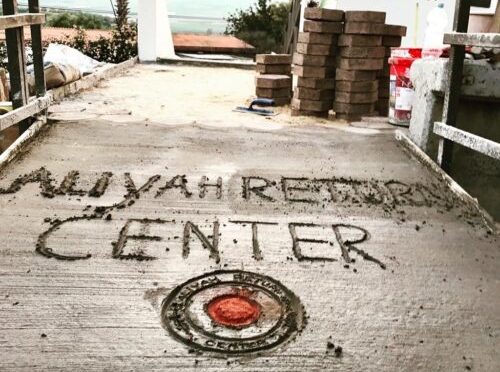
At Beit Zera there was cooperation connected with aliyah and immigrant absorption involving the Jewish Agency and Return Ministries/Aliyah Return Center. The relationship with organizations associated with the Christian and Messianic world generated controversy, including concerns raised by religious groups about possible missionary activity among new immigrants.
The controversy eventually reached the leadership of the Jewish Agency.
In late 2020, while Isaac Herzog was serving as Chairman of the Executive of the Jewish Agency for Israel, the Agency reviewed its relationship with Return Ministries. The Jewish Agency subsequently alleged that there had been numerous violations of its contractual agreement, and the partnership in its then-current form was terminated.
There is, however, an important fact that should not be left out of this story. The Jewish Agency itself said that its investigation had found no evidence that the organization’s volunteers had engaged in converting or proselytizing new immigrants.
For that reason, the Beit Zera controversy should not simply be summarized by saying that missionary activity took place and therefore the agreement was terminated. The circumstances were more complicated.
The episode nevertheless demonstrates how quickly an institutional relationship involving organizations associated with the Messianic or evangelical world can become a sensitive public issue in Israel, particularly when religious objections are raised.
That brings us back to the present. Isaac Herzog, who headed the Jewish Agency when this controversy came to a head, is now the President of the State of Israel.
This does not prove that President Herzog keeps his distance from Israel’s Messianic Jewish community because of opposition from religious groups. It would be unfair to attribute such a motive to him without evidence. But the precedent at Beit Zera makes the question worth asking.
Could concern about raising eyebrows among influential religious constituencies affect how openly the President of Israel is willing to engage with Israel’s Messianic Jewish community?
There is another apparent paradox that makes this question even more striking. Christian and evangelical leaders from around the world who openly proclaim their faith in Jesus can be friends of Israel, support the State of Israel, meet Israeli leaders and publicly express their affection and support for Israel and its President.
They too believe in Jesus.
Yet when an Israeli Jew says that he or she believes in Yeshua, the public reaction can be dramatically different.
A Christian who believes in Jesus may be welcomed as a great friend of Israel, while a Jew who believes in Yeshua can be viewed by parts of Israeli society with suspicion or even rejection.
When I see Christian leaders and prominent believers openly embracing the President of the State of Israel, I therefore find myself asking a simple question. Is the President prepared to extend that same embrace to the Messianic Jew who lives here, works here, serves here, pays taxes here, raises a family here and regards the State of Israel as home?
Perhaps this is precisely the test of a President who seeks to unite a deeply divided society. It is not only about embracing those who are easy to embrace.
When the President meets an Orthodox Jew, a secular Jew, a Muslim, a Christian or a Druze citizen, nobody should conclude that the President has adopted that person’s theology or religious beliefs. In exactly the same way, meeting representatives of the Messianic Jewish community should not be interpreted as theological recognition or endorsement of their faith. It can simply be recognition of fellow Israeli citizens.
That is why I would like to hear an answer from the President’s Residence to a straightforward question. Would the President of the State of Israel be willing to publicly meet representatives of Israel’s Messianic Jewish community and acknowledge that they, too, are part of the Israeli society he seeks to unite?
If the answer is no, Israelis deserve to understand why. And if one consideration is concern about the reaction such a meeting might provoke among religious groups, then the question becomes even more important.
Can the President of the State of Israel truly be the President of everyone only as long as nobody raises an eyebrow?
For further reading on the Jewish Agency’s dispute with Return Ministries and the alleged contractual violations, see the December 2020 report by eJewishPhilanthropy [Photo above is from this article and was obtained via Facebook for that purpose.]
You May Also Like